You've probably heard about the gut microbiota, that community of millions of microorganisms living in your intestine. It's a topic that shows up everywhere, almost always wrapped in grand promises. Here we're going to do the opposite: explain it calmly, without exaggeration, saying only what can genuinely be said.
Because if there's one thing Frank Suárez taught us, it's that you can't take good care of what you don't understand. And understanding what probiotics and prebiotics actually are is a good place to start.
What are the microbiota, probiotics and prebiotics?
Your intestine is home to an enormous number of microorganisms. Together they're called the gut microbiota, and it's shaped by many things: your diet, your lifestyle, your rest and the use of antibiotics, among others.
Within that world there are two words worth telling apart:
- Probiotics. These are live microorganisms. They occur naturally in fermented foods such as yoghurt and kefir, and they also exist in supplement form.
- Prebiotics. These are certain food components that the body doesn't digest and that serve as food for the bacteria in the intestine. They're found in fruits, vegetables and whole grains, such as oats, onion and garlic.
A simple way to remember it: probiotics are the residents, and prebiotics are the pantry they have available.
"You're not what you eat, but what you digest"
Frank Suárez often repeated that the key isn't only what you put on your plate, but how your body processes that food. It's one of those simple lines that holds an important idea: digestion is part of how you relate to your food each day.
That's why, within a well-cared-for lifestyle, many people pay attention to their gut flora. Not as a fad, but as one more piece of the whole.
How to get probiotics and prebiotics day to day
The most natural way to include them is through food.
- For probiotics: fermented foods such as yoghurt, kefir or sauerkraut.
- For prebiotics: a good variety of fruits, vegetables, legumes and whole grains, with natural sources of fibre such as oats, onion, garlic or banana.
For many people, a varied diet covers a good part of these needs. When food falls short, some choose supplements as a complement, not as a substitute for eating well.
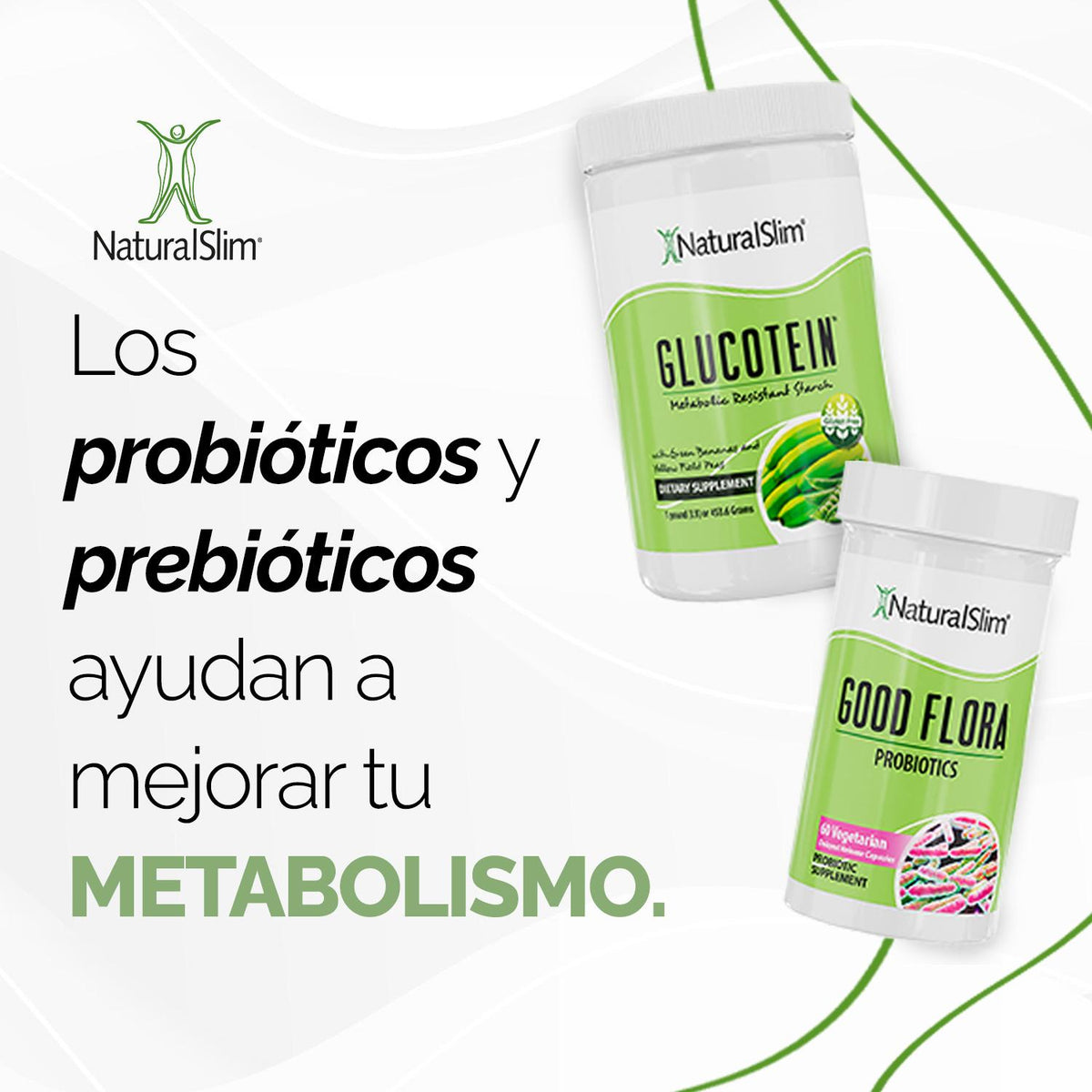
Good Flora® and GlucoTein® by NaturalSlim®
Within the NaturalSlim® System there are two products for people who want to look after this aspect of their diet. We describe them exactly as they are, without attributing effects we can't promise.
Good Flora® is a supplement that provides 10 billion colony-forming units (CFU) of live cultures from 6 selected strains. In plain terms: a carefully made blend of live bacteria, in a form that's easy to take every day.
GlucoTein® provides a blend of resistant starches, from pea and green banana. It is, essentially, a source of plant-based fibre.
Neither of them is a miracle solution, and we don't present them that way. They're simply a practical way to add live cultures and fibre to your routine, within a lifestyle that looks after your diet as a whole.
Rest, food and the bigger picture
At NaturalSlim Europe we don't believe in loose pieces, we believe in the whole. A varied diet, rest, water and the support of a consultant are all part of one system. Probiotics and prebiotics are a part of that whole, not the whole thing.
If you'd like to understand better how food fits into a wider approach to your metabolism, you don't have to figure it out alone. At NaturalSlim Europe you have a team of Certified Metabolism Consultants™ ready to guide you, step by step, according to your situation. There's nothing to buy to get started: the first step is simply talking to someone who understands your metabolism.

Share:
Restoring your metabolism to slim down: why it matters and how to start
Being Thin Doesn't Always Mean a Healthy Metabolism